
6
Australia's New Rule: Students Can No Longer Bring Spouse or Children
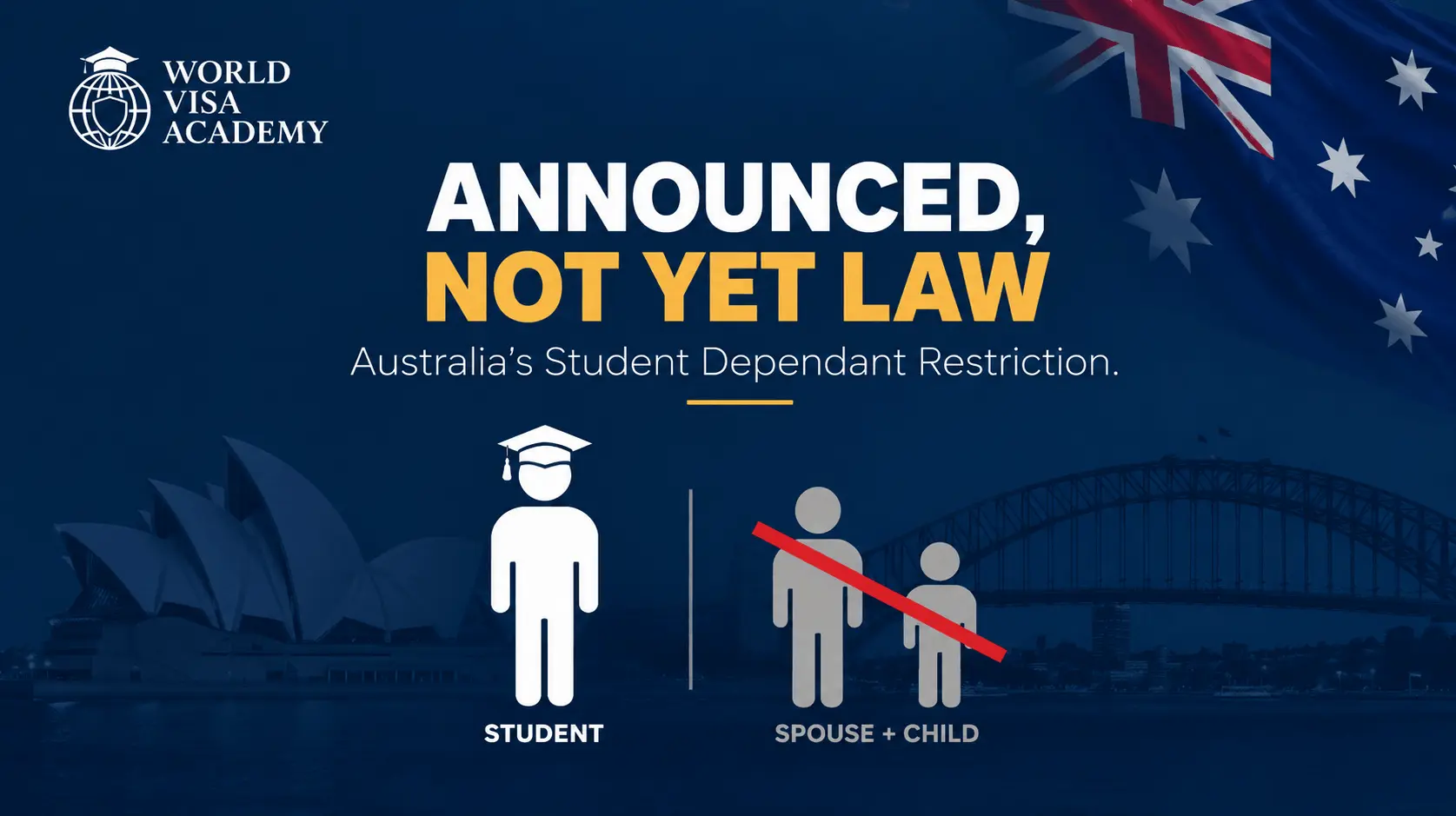
Since 2 October 2026, most Student visa (subclass 500) applicants can no longer include a partner or children in their application. Family members also cannot be added after a Student visa has been granted, and there are no exemptions to that. When this post was first published it said the change had not started. That is no longer true.
You may still be able to include family if you are a PhD student, a DFAT or Defence-sponsored student, a foreign government scholarship recipient, or an eligible student from a Pacific or ASEAN country. If your family is already on your current Student visa and you apply again in Australia, you may be able to include them in your next application.
The Temporary Graduate visa (subclass 485) part has not started. As of 7 November 2026 the Home Affairs page for the 485 visa still says you can bring your family with you.
Source: Department of Home Affairs, Changes to Student visa application rules (subclasses 500 and 590), checked 7 November 2026.
What Was Said in September, and What Changed
On 17 September 2026, Home Affairs and Immigration Minister Tony Burke announced at the National Press Club in Canberra that most student visas will no longer allow secondary applicants. When this post was written on 29 September, no start date had been published.
The Subclass 500 change took effect on 2 October 2026. Unless you are exempt, you can no longer include your partner or children on a Subclass 500 application.
What Was Actually Announced
Under the proposal, most prospective international students on a Subclass 500 visa, and graduates on a Subclass 485 Temporary Graduate visa, will no longer be able to bring a partner or dependent children as secondary visa holders.
The government describes the measure as "restricting secondary applicants on most student visas," and frames it as closing what it calls the "student family pathway", which allowed secondary migrants to effectively enter Australia through a student visa holder.
Note that the graduate visa is included. A student who was planning to bring family during their post-study work period faces the same restriction.
Australia Student Visa Training Course
The Exemptions in Force
The exemptions are narrow. According to the Department of Home Affairs, you may be able to include family members if you are:
- a PhD student
- a Department of Foreign Affairs and Trade (DFAT) or Defence-sponsored student
- a foreign government scholarship recipient
- an eligible student from a Pacific country or an ASEAN member country.
Research master's students are not on that list, although the September announcement suggested postgraduate research in general might be. Coursework Bachelor's and Master's degrees, which make up the bulk of Indian student enrolments in Australia, are in scope.
Why Australia Is Doing This
The dependants change is one component of a wider migration package aimed at cutting net overseas migration from roughly 292,000 a year to 245,000 in 2026-27 and 225,000 in 2027-28.
Worth being precise about one point: student visa numbers themselves are not being reduced by this measure. It targets the visas granted to partners and children specifically, not the primary student intake.
The UK Precedent, and Why It Matters
Australia's approach closely mirrors a policy the United Kingdom introduced in 2024, when it barred most international students from bringing dependants and exempted only postgraduate research degrees.
The UK ban led to a sharp drop in overseas enrolments at the time. Some analysts believe that shift actually helped Australia remain attractive by comparison, despite its own rising costs and processing delays.
That comparative advantage now narrows. If you were choosing Australia partly because the UK closed this door, the calculation has changed.
If You Are Exempt: Who Counts as Family
If an exemption applies to you, these family members can be included:
Family MemberEligibilitySpouse or de facto partnerMarried, or genuine de facto relationship generally of at least 12 monthsDependent childrenUnder 18Partner's dependent childrenUnder 18Children aged 18 to 23Where financially dependent on youExtended family (parents, siblings, cousins)Not permitted, visitor visa 600 insteadRegistered relationships in some Australian states can substitute for the 12-month de facto rule in certain cases.
All family members must meet health and character requirements, and you must demonstrate you can financially support them.
The Cost Detail That Catches Families Out
If you are exempt and bring children, budget properly for one item most people miss.
School-aged children of student visa holders must attend school, and international student fees generally apply at public schools. Fees differ by state and by year level.
The difference between states can be five figures a year. Some states discount or waive these fees for children of research students or scholarship holders. Check your state's education department before committing.
If You're Already in Australia
If your family members are already included on your current Student visa and you apply for your next Student visa in Australia, you may be able to include them again. You may also be able to include them, in or outside Australia, if you need up to 12 more months to finish the main course on your current visa, or if your education provider defaulted. The primary applicant and all family members must be in the same location when the application is lodged.
What you cannot do is add family members to a Student visa after it has been granted. Home Affairs says there are no exemptions to that rule.
What to Do Right Now
- Check the Department of Home Affairs website on the day you lodge, since the position can change quickly under a regulation-based implementation.
- If family matters to your plan, check first whether you are exempt. If you are not, your partner and children cannot be included on a Subclass 500 application.
- Check the exemption list exactly: PhD, DFAT or Defence-sponsored, foreign government scholarship, or eligible Pacific and ASEAN students.
- If you're flexible on course type, note that a PhD is on the exemption list and a coursework degree is not.
- Prepare relationship evidence to a high standard now, since the evidentiary bar for dependants is already higher than most students expect.
- Budget for school fees by state if bringing school-aged children.
- Compare destinations honestly if family accompaniment is non-negotiable, since several countries still permit it with fewer restrictions.
Coming Later Is No Longer an Option
Before 2 October, some students planned to come first and bring family later. That route has closed: family members cannot be added to a Student visa after it is granted, and Home Affairs says there are no exemptions to that rule. If you are exempt and want your family with you, include them in the application itself.
Checklist Before You Lodge
- Confirmed the current position directly on the Home Affairs website today
- Checked whether you fall within an exemption now in force
- Gathered relationship evidence: marriage certificate, or 12 months of de facto evidence
- Prepared health and character documentation for each family member
- Demonstrated financial capacity to support dependants
- Researched school fees for your specific state and year level
- Included every family member in the application itself, since none can be added after grant
The Honest Bottom Line
The Subclass 500 rule has been in force since 2 October 2026. Unless you are exempt, your partner and children cannot be included, and no one can be added after the visa is granted.
If bringing your spouse or children is central to why Australia works for you, confirm on the Home Affairs website whether you are exempt before you apply, or seriously compare destinations that still allow it.