
6
EU Entry/Exit System (EES) Explained: Fingerprints and Face Scans at Schengen Borders
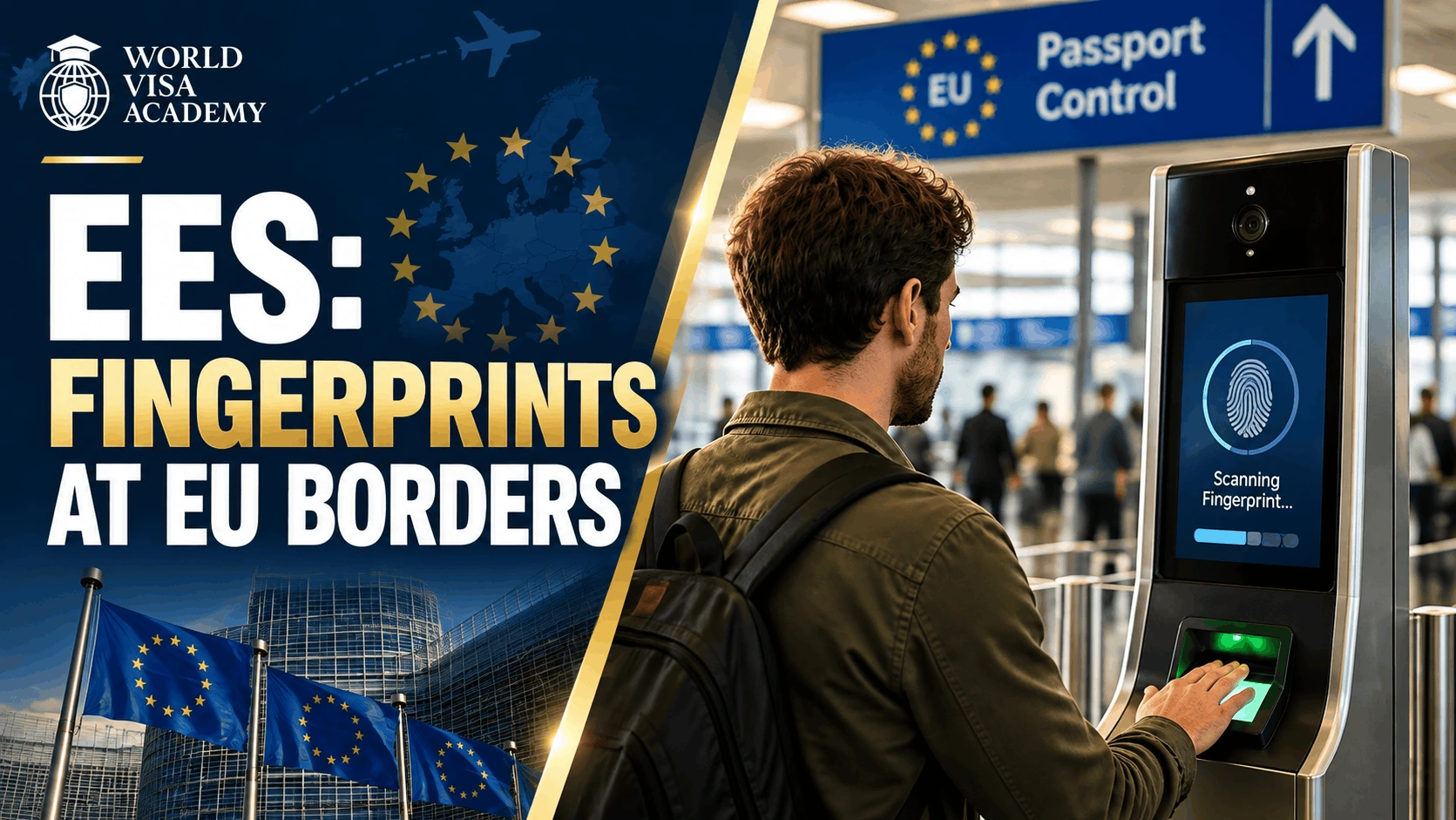
Flying into Europe soon? Do not be surprised if passport control asks you to look into a camera and scan your fingers. This is the European Union's Entry/Exit System, known as EES.
Since 10 April 2026, EES has been fully operational at the external borders of all 29 Schengen countries. It applies to non EU visitors on short stays. Your first entry creates a digital record with your fingerprints and face, and later trips are checked against it.
Short on time? Here is the quick answer.
Your questionThe short answerIs EES running?Yes, fully since 10 April 2026.Who does it apply to?Non EU visitors on short stays.What is recorded?Fingerprints, face image and passport data.Cost?Free; no application needed.What Gets Recorded
DataWhenNoteFace imageFirst entry, checked laterTaken by cameraFingerprintsFirst entryChildren under 12 exemptPassport detailsEvery crossingName, number, expiryEntry and exit datesEvery crossingCounts your daysRefusalsIf refusedRecorded with reasonOld Way Versus New Way
BeforeWith EESPassport stampsDigital recordDays counted by handDays counted automaticallyOverstays easy to missOverstays flaggedWhere It Applies
EES applies at the external borders of the 29 Schengen countries. Ireland and Cyprus do not use it. Flights between two Schengen countries are not checked.
The 90 Day Rule Made Simple
Trip (example)Days usedDays left in 18010 January to 8 February30601 April to 30 April3030Trip from 1 JuneUp to about 30Plan carefullyBoth entry and exit days count. Use the official EU short stay calculator before each trip.
Tips to Avoid Delays
- Allow extra time at busy airports, especially on your first trip.
- Remove glasses or hats for the photo.
- Use kiosks where available, then see an officer.
- Keep your own record of entry and exit dates.
What Happens at Your First Crossing
On your first trip after EES started, an officer or a kiosk will scan your passport, take a photo of your face and scan four fingerprints. This creates your record. It may take a few extra minutes, especially at busy times.
On later trips, the system checks your face against your record, which is usually quicker. Your record is kept for about three years from your last exit. If you were refused entry, that is recorded too.
By late March 2026, EES had recorded more than 45 million border crossings and more than 24,000 refusals. Temporary measures that allowed border staff to relax checks at busy times ended on 6 September 2026.
Words You Will See
New to these terms? Here is what they mean in plain English.
WordWhat it meansBiometricsBody data such as fingerprints and face imagesExternal borderThe edge of the Schengen area, such as an airport arrivalOverstayStaying longer than you are allowedKioskA machine that scans your passport and faceIf you hold a residence permit or a long stay visa from a Schengen country, EES rules are different for you, so check how they apply before you travel. Children still have their face image and passport details recorded even though they are not fingerprinted.
Biometrics, VFS & Appointment Systems Training
Before You Rely on Any Figure
The rules above reflect the official EU position as of October 2026. Rules, fees and dates change, so check the official government website on the day you act. For questions about your own case, speak to a licensed immigration lawyer or an authorised representative. World Visa Academy is a training academy; it does not file applications or guarantee any visa or outcome.
The Honest Summary
EES is now part of every trip to Europe for non EU visitors. It is free, automatic and strict about the 90 day rule. Allow time at the border and track your days.