
6
India's Overseas Student Enrolment Just Fell 6 Percent, and Remittances Are at an 8-Year Low: What's Really Going On
The Headline Numbers, and What They Actually Measure
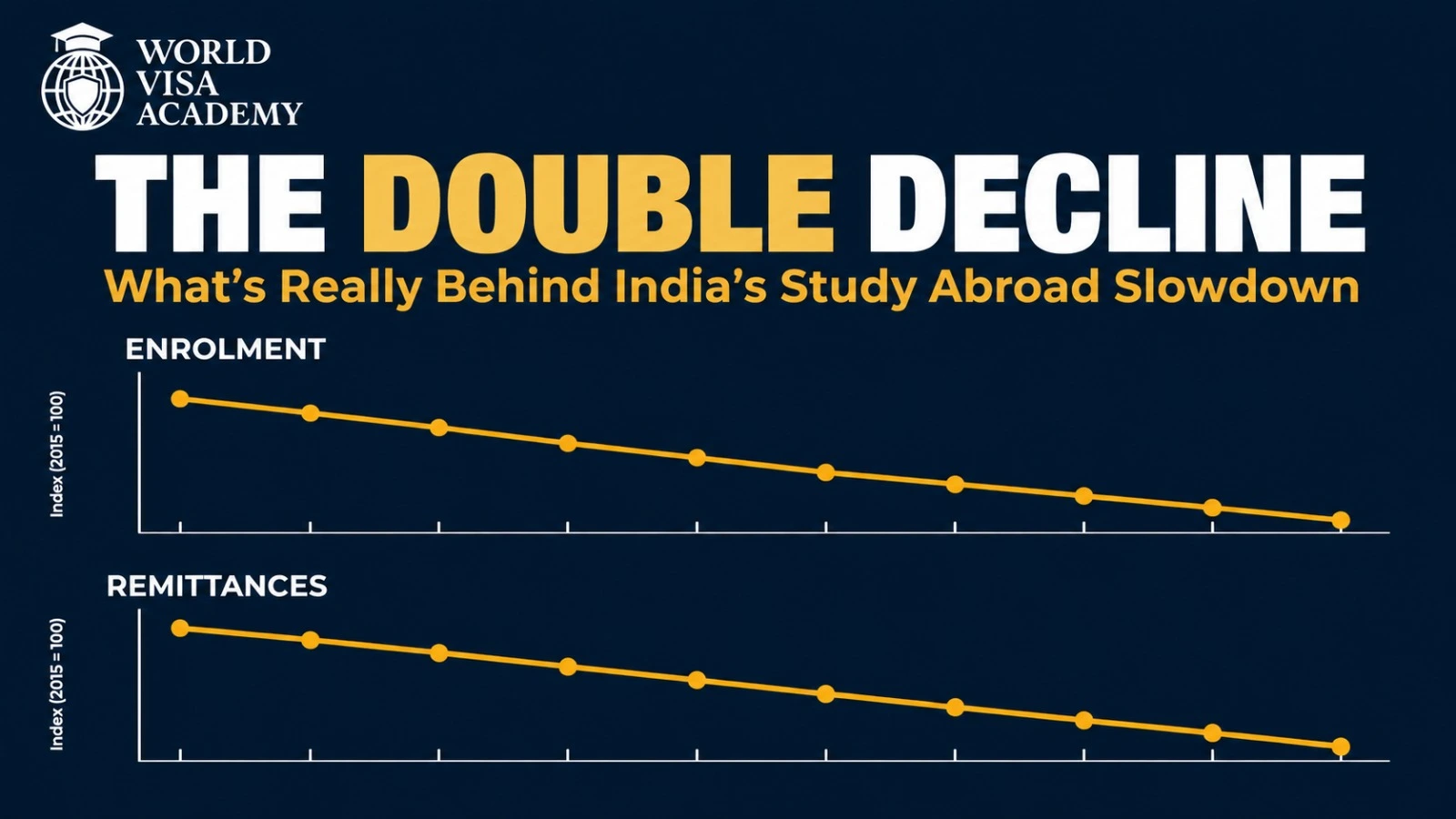
Two numbers have been circulating together recently, and both are real. India's outbound higher education enrolment fell 5.7 percent in 2025, the first decline after three straight years of growth. And money sent abroad specifically for overseas education hit its lowest level in eight years during the April to August 2025 window, the peak season for these transfers.
Both numbers check out against official data. But they measure narrower things than the headlines suggest, and getting the precise scope right matters if you're explaining this to a client or building a business strategy around it.
The Enrolment Drop: 5.7 Percent, Not the Whole Story
According to data the Ministry of External Affairs tabled in Parliament, Indian students pursuing higher education abroad fell from about 1.33 million in 2024 to roughly 1.254 million in 2025, a drop of around 76,000 students, ending three consecutive years of growth.
Here's the twist worth knowing before you repeat this stat anywhere. India's total count of students abroad, when you include school level students alongside higher education, actually hit an all time high of 1.882 million across 153 countries in 2025. That headline growth exists only because 2025 was the first year school level students were counted in the total. Strip that methodology change out, and the higher education figure that most of your clients actually care about, degree seeking students at international universities, genuinely fell.
A second, separate government dataset tells a similar but distinct story. Bureau of Immigration figures on Indians departing for study specifically show departures falling from 9.08 lakh in 2023, to 7.7 lakh in 2024, to 6.26 lakh in 2025, a 31 percent drop over three years. This is a different count than enrolment, departures versus enrolled students, but it points in the same direction: fewer Indian students are actually leaving for study abroad than a couple of years ago.
Why It's Happening: Visa Tightening Across the Big Four
The decline isn't a mystery, and it isn't really about India losing interest in studying abroad. It's about the traditional top destinations becoming harder and more expensive to get into.
Canada saw a 41 percent drop in Indian enrolment between 2023 and 2024, driven by capped study permits and, per some reporting, rejection rates on Indian study permits approaching 80 percent in 2025. The UK recorded a 27 percent fall over the same period, with Higher Education Statistics Agency data showing Indian enrolments down a further 12 percent year on year more recently, following a 5 percent decline the year before that. In the United States, new international enrolments overall fell 17 percent in fall 2025 according to the Open Doors report, with graduate enrolments specifically down 12 to 15 percent, even though India retained its position as the single largest source country, helped by continuing students already in the pipeline.
Cost is compounding the visa problem. One analysis found the annual cost of studying in the US has risen by roughly ₹10 lakh for Indian students over the past five years, with currency depreciation and tuition increases pushing total study abroad costs up 10 to 12 percent in 2025 alone. Put plainly: it got harder to get in, and more expensive once you did.
[INTERNAL LINK: Which countries are actually gaining Indian students right now]
The Remittance Story: Money Follows Students
This is where the second half of the headline comes from, and the data behind it is genuinely striking once you see the full trend line.
RBI data tracked under the Liberalised Remittance Scheme shows that Indian families sent about $1 billion abroad specifically for "studies abroad," covering tuition, accommodation and living expenses, between April and August 2025, a 22 percent drop from the same period the year before. That is the lowest April to August outflow since 2017, when the figure stood at $787.8 million. The longer trend is even more dramatic: study abroad remittances peaked at $2.37 billion in the same window in 2021, then fell to $1.48 billion in 2022, $1.28 billion in 2024, and finally to that $1 billion low in 2025, a decline of nearly 58 percent from the post pandemic peak.
This wasn't a one season blip either. Looking at full year data, education related remittances under the LRS fell 18.77 percent year on year in FY25, and continued falling another 20.9 percent in FY26. The most recent monthly data available, from April 2026, showed overseas education remittances down 17.6 percent year on year specifically, confirming the decline has continued well into the most current reporting period.
One Confusing Detail: This Is Not India's Overall Remittance Story
Here's an important distinction worth making clearly, because it's easy to get this backwards. Everything above describes outward remittances, money Indian residents send abroad, specifically the slice earmarked for education.
India's inward remittances, money sent home to India by its overseas diaspora, are telling a completely different story: they're at record highs, projected to reach $137 to $140 billion in FY26, up from $125.4 billion in FY25. If someone tells you "India's remittances are struggling," ask them which direction they mean, because the country receiving record inflows and Indian families spending less on sending their kids abroad are two entirely separate trends happening at the same time, for different reasons entirely.
Where the Money and Students Are Going Instead
The decline in traditional destinations hasn't meant Indian students are giving up on studying abroad altogether. Reporting on the shift points to growing interest in Germany, France, Ireland, Italy, Finland, Japan, South Korea and the UAE, destinations offering either lower tuition, tuition free public universities, or comparatively simpler visa pathways than the traditional big four. More families are also leaning on education loans and scholarships to manage the rising cost of study wherever they choose to go.
The Decline at a Glance
MetricFigurePeriodHigher education enrolment abroadFell 5.7% (1.33m to 1.254m)2024 to 2025Student departures for study (Bureau of Immigration)Fell 31% over 3 years (9.08 lakh to 6.26 lakh)2023 to 2025Canada enrolmentFell 41%2023 to 2024UK enrolmentFell 27%, then a further 12%2023 to 2025US new international enrolments (overall)Fell 17%Fall 2025Study abroad remittances (peak season)$1 billion, lowest since 2017April–August 2025Study abroad remittances decline from 2021 peakDown nearly 58%2021 to 2025Education remittance decline (most recent data)Down 17.6% year on yearApril 2026India's total inward remittances (separate trend)Record high, $137–140 billion projectedFY26What This Means for Consultants
- Be precise about which number you're citing. "Enrolment fell 6 percent" refers to higher education specifically, not India's total outbound student count, which actually rose once school level students were included. Getting this distinction right protects your credibility with clients who may have seen conflicting headlines.
- Address cost directly and early. With study abroad costs up 10 to 12 percent in a single year and remittances for education falling for multiple consecutive years, affordability has become a genuine, not perceived, barrier for many families.
- Widen your destination conversation. Germany, Ireland, France and parts of Asia are absorbing real demand that's moving away from Canada, the UK and the US. Clients need this on the table early, not as an afterthought after a Big Four application struggles.
- Don't confuse this decline with a lack of appetite. Indian demand for studying abroad hasn't disappeared, it's being redirected and made more cautious by visa uncertainty and cost, which is a very different problem to solve for a client than genuine disinterest.
- Watch destination specific visa data closely. With rejection rates reportedly running as high as 80 percent for Indian applicants to Canada in 2025, screening a client's profile honestly before they invest in an application matters more than ever.
Quick Checklist Before Advising a Study Abroad Client
- Confirmed which specific dataset you're referencing, enrolment, departures, or remittances, since each tells a slightly different part of the story
- Discussed current visa rejection trends for the client's specific target country, not outdated approval expectations
- Reviewed realistic, current cost estimates, including the recent rise in overall study costs
- Introduced at least one alternative destination outside the traditional big four, where relevant to the client's field
- Discussed financing options, including education loans and scholarships, given the broader affordability pressure
The Bigger Picture
This isn't a story about Indian families losing interest in international education. It's a story about the traditional path getting narrower and more expensive at the same time, and families responding rationally by sending fewer students, spending less per attempt, and increasingly looking beyond the four countries that used to be the default answer. Understanding that distinction, decline in demand versus decline in access, is exactly what separates advice that reassures a nervous client from advice that actually helps them plan around the real obstacles.