6
Japan Is Hiring Sri Lankans: Your Complete Guide to the SSW Work Visa
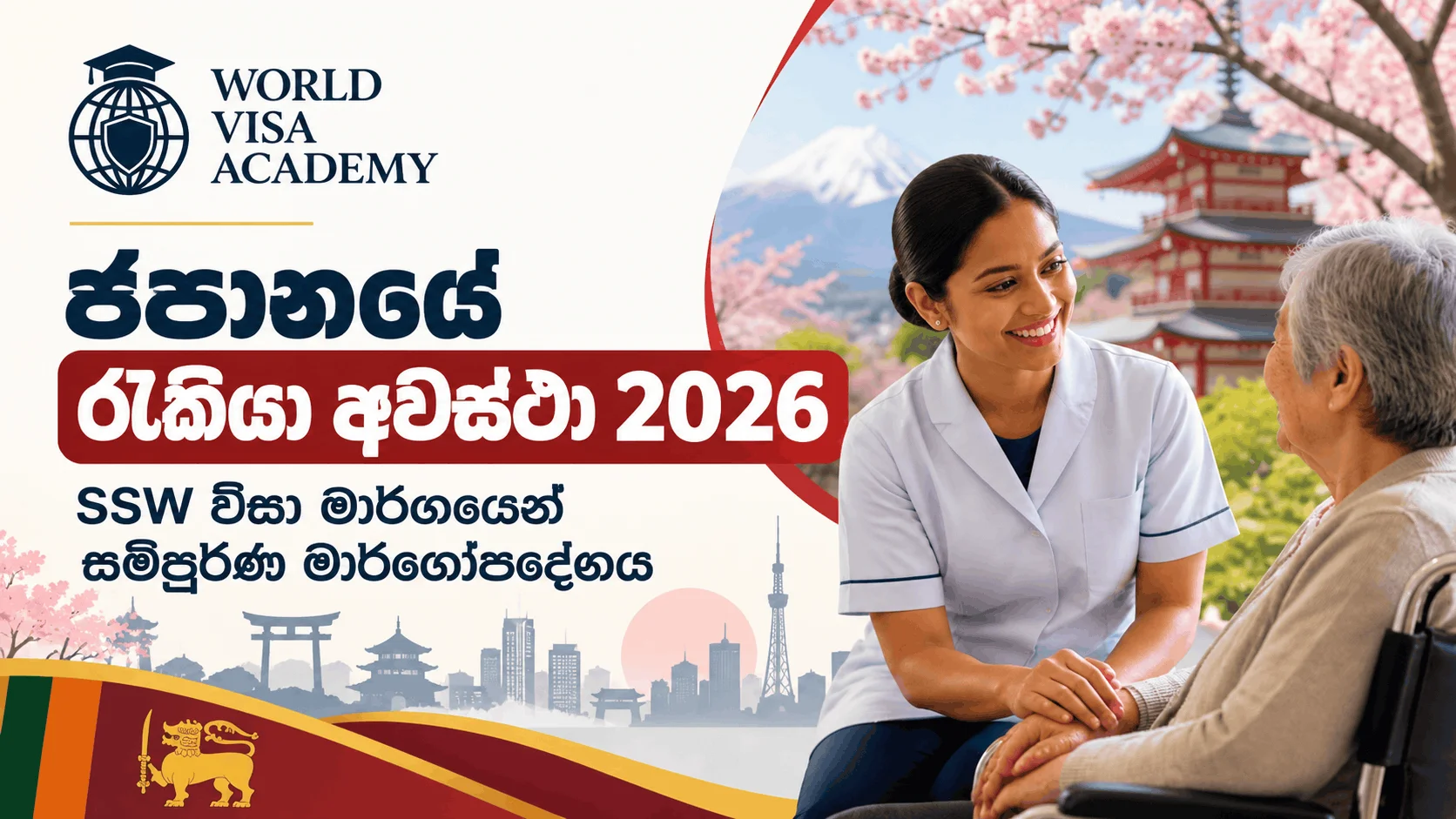
- The Specified Skilled Worker visa lets Sri Lankans work in Japan in shortage sectors.
- You usually need a Japanese language test pass, such as JFT Basic or JLPT N4, plus a skills test.
- Skills tests have been held in Sri Lanka for sectors including nursing care, food service, agriculture and construction.
- The SLBFE runs official recruitment programmes and warns against private shortcuts.
Japan is ageing fast, and it needs workers in hospitals, care homes, restaurants, farms and building sites. For young Sri Lankans, that has created a real opportunity: legal jobs with proper contracts, Japanese salaries and valuable skills.
The route is the Specified Skilled Worker visa, often called SSW. To get it, you usually pass a Japanese language test and a skills test for your sector, then get hired by a Japanese employer. Skills tests have been held in Sri Lanka since 2023 for several sectors, and the SLBFE runs official recruitment programmes, including a nursing care programme in August 2026.
Here is everything you need to know, step by step.
Short on time? Here is the quick answer.
Why is Japan opening its doors? Its population is shrinking and getting older, and many industries cannot find enough local workers. The SSW visa, introduced in 2019, lets trained foreign workers fill those gaps legally, with the same labour protections as Japanese workers.
Two Levels of SSW
Most Sri Lankans start with SSW (i). With experience and further tests, some can move to SSW (ii).
Sectors Open to Sri Lankans
Japan's SSW programme covers a range of industry fields. Not every field has tests in Sri Lanka. Skills tests in Sri Lanka have covered the following, with more being added over time.
Pick your sector carefully. Nursing care suits patient, caring people who are comfortable with physical work. Food service suits people who like fast, team based work. Agriculture and construction suit those who enjoy outdoor, physical jobs. Your sector decides your skills test, your interview and your daily life in Japan.
The Tests You Need
Example: SLBFE Nursing Care Programme 2026
In August 2026, the SLBFE held an awareness and recruitment programme for SSW nursing care jobs in Japan. Its published requirements show what Japanese employers look for.
These SLBFE requirements are stricter than the general SSW rules, because they reflect what Japanese care employers want. Other sectors and programmes may set different age, height or education rules, so always read the notice for your programme.
Step by Step to an SSW Job
- Choose a sector that matches your skills and interests.
- Study Japanese and pass JFT Basic or JLPT N4.
- Register for and pass the skills test for your sector.
- Watch the SLBFE for official recruitment programmes and employer interviews.
- Attend interviews and receive a job offer from a Japanese employer.
- Your employer applies for your Certificate of Eligibility in Japan.
- Apply for the visa at the Japanese Embassy and complete pre departure steps.
- Learning Japanese takes months; start early.
- Keep your test certificates safe; employers will ask for them.
- Be honest in interviews about your skills and health.
A Realistic Japanese Study Plan
Japanese takes time, but it is very achievable with steady study. This is a typical plan many learners follow to reach the level needed for JFT Basic or JLPT N4.
Mistakes to Avoid
- Paying an agent who promises a Japanese job without any test passes.
- Going to Japan on a tourist visa hoping to find work.
- Hiding a previous Japan visa refusal; it will be found.
- Choosing a sector only for salary, without the skills or health it needs.
- Ignoring the SLBFE's official programmes and notices.
Before You Rely on Any Figure
The details above come from SLBFE notices, official Japanese programme information and reliable reports up to October 2026. Test dates, sectors and requirements change regularly. Check the SLBFE website, the Embassy of Japan in Sri Lanka and the official test providers before you register or pay. For case specific questions, contact the SLBFE directly. World Visa Academy is a training academy; it does not recruit workers or guarantee any job or visa.
The Honest Summary
Japan is genuinely hiring Sri Lankans, but it wants prepared people. Learn Japanese, pass your sector's skills test, follow the SLBFE's official programmes, and be patient through the employer and visa steps. It takes effort, but the reward is a legal job, real skills and a respected place in one of the world's most organised workplaces.